Afrotellers began as a conference and became a movement. That transition was not planned. The need was real, and the timing was right.
The founding conviction was simple: Afrika does not lack storytellers. What it lacks is a structure of power that allows those storytellers to tell their stories on their own terms, to their own communities, without routing their narratives through institutions and funding systems that have their own interests in how Afrika is framed.
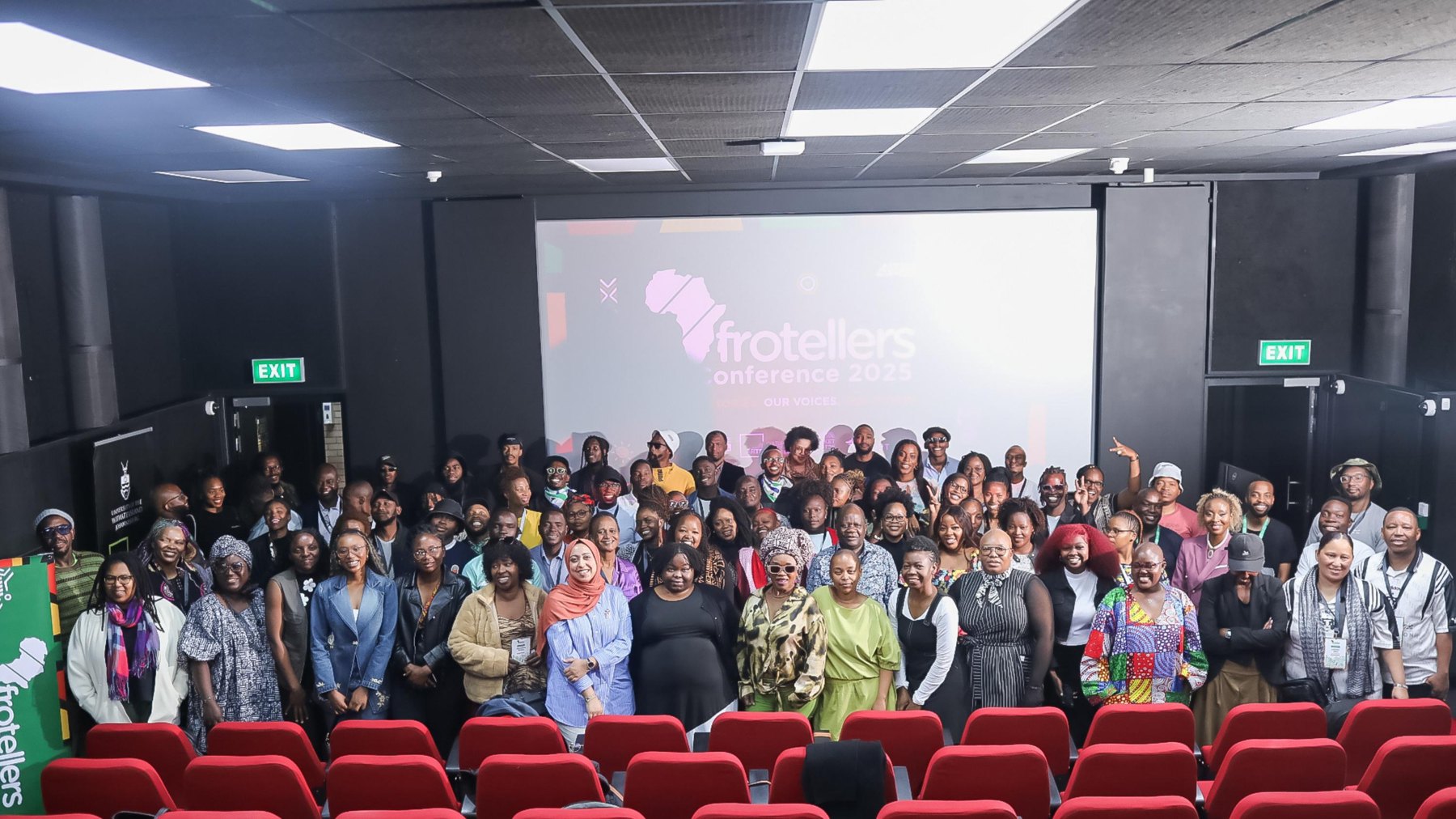
The first Afrotellers Conference, in 2024 under the theme Beyond Borders: Mapping New Frontiers of Afrikan Narratives, was a space to name that problem plainly and to start building the alternative. More than 130 participants gathered in Johannesburg for what became a collective affirmation that Afrikans must reclaim the power to define, document, and share their own realities.
In 2025, under Our Stories, Our Voices, Our Power, the movement deepened into a continental platform for narrative power and movement building — and grew into a year-round ecosystem through Community Hubs across eleven countries. Over three hundred storytellers, activists, journalists, community leaders, filmmakers, oral historians, and cultural workers have since claimed the Afrotellers identity.
130+ participants gather under Beyond Borders. A conference becomes a question, and a question becomes a community.
Our Stories, Our Voices, Our Power. Eleven community hubs take root. A movement of 300+ members spans the continent and diaspora.
Afrotellers launches its 2026–2028 strategy and becomes a standalone institution, convening the continent on narrative sovereignty in the age of AI.
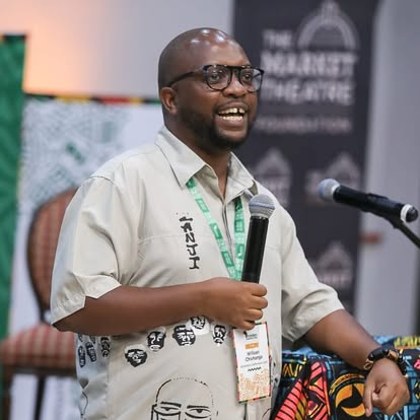
“Afrotellers has evolved from being just a conference people attend and remember fondly, to a continental institution that shapes how Afrika's stories are told, who gets to tell them, and what becomes possible when that telling is on Afrikan terms.”
Willson Chivhanga
Co-Founder & Executive Director, Afrotellers · Johannesburg, March 2026
Narratives shape what societies believe is possible, who they invest in, which voices they trust, and what futures they can imagine. Narrative power — the capacity to shape the stories that govern collective understanding — is a form of real, material power.
For Afrika, this is not abstract. Research by Afrika No Filter has documented that harmful, stereotypical portrayals of the continent cost Afrikan nations an estimated $4.1 billion annually in inflated sovereign debt interest rates alone. When Afrika is consistently framed as a place of poverty, crisis, and dependency, the consequences extend well beyond representation — they distort investment, shape foreign policy, and shape how Afrikans see themselves.
At the same time, AI systems are being trained primarily on Western narratives and data. Afrikan stories are dramatically underrepresented in the knowledge architectures that will increasingly shape how the world understands Afrika. If Afrikan storytelling institutions do not build deliberately into these systems, the asymmetries of the analogue world will be reproduced and accelerated in the digital one.

“The problem is not that Afrika lacks stories. The problem is that for too long, other people have been telling them.”